
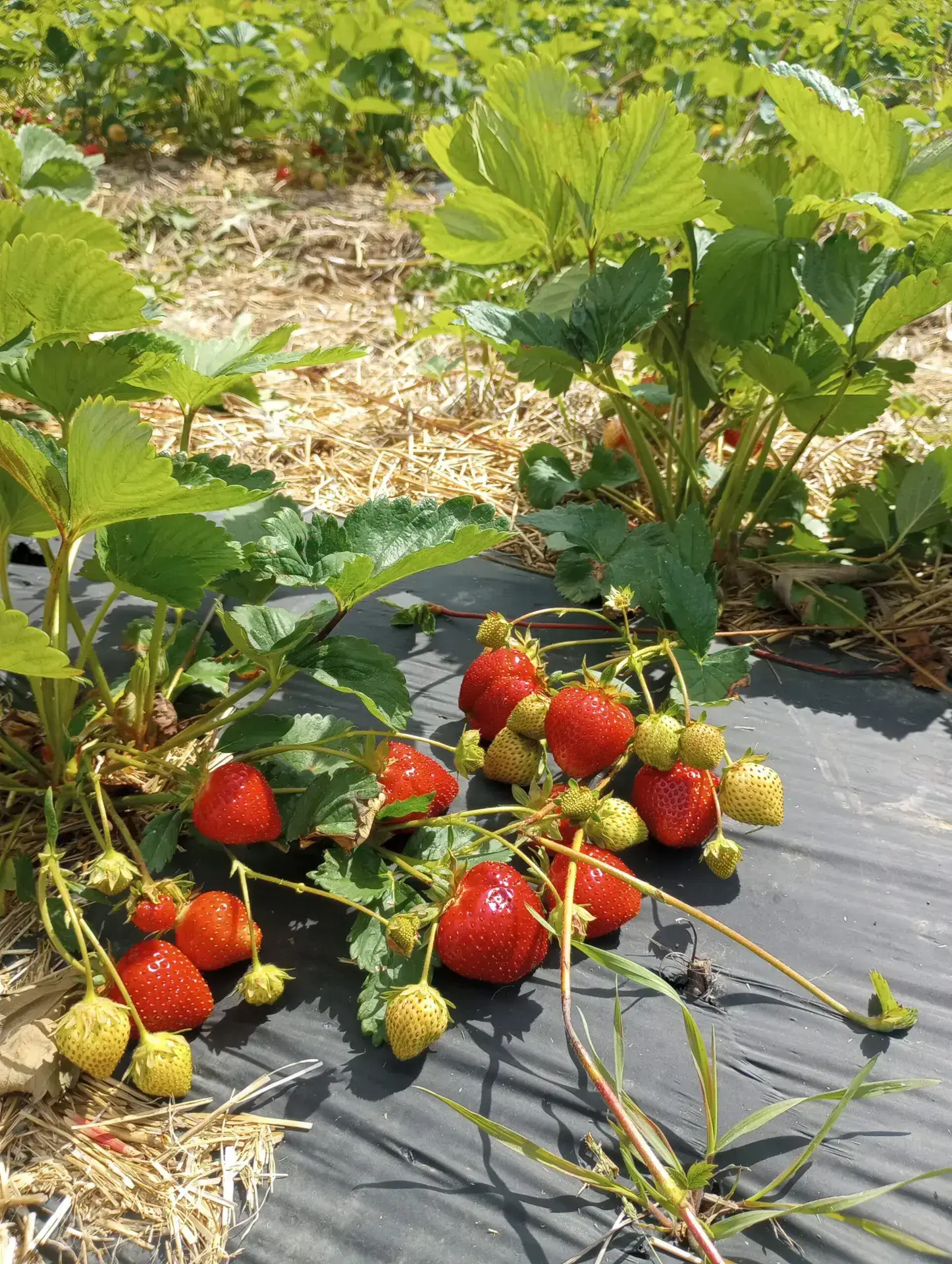
The Season Starts Before Most People Can Pick
By late April, people searching for strawberry picking in New Jersey are usually asking the same practical question: when will the fields actually be ready? Around Flemington, the days are longer, afternoon temperatures are warmer, and families start looking for the first real outdoor farm day of the season. That excitement makes sense, but it arrives before the strawberries are ready. At Peterson Family Farm, the picking season does not begin because spring feels established. It begins only after the crop moves through flowering, cold-weather risk, fruit development, and dry enough field conditions to support picking.
That is the main point of the season. Late April is when people start paying attention. Late May is when picking can become possible. June is usually the best month because the farm’s strawberry varieties begin overlapping and producing with more consistency. The entire season is short, and that is exactly why timing matters.
Why Late April Usually Feels Ahead Of The Field
Late April is a part of the season that causes the most confusion because the farm can look active even when it's not ready for strawberry picking. Plant growth has resumed, and warm afternoons can make the season feel much closer than it is. The problem is that strawberries still need time after bloom before they become harvestable. Rutgers agricultural guidance explains that strawberries generally need about 25 to 30 days after bloom before they are ready for harvest, which means late April warmth does not create immediate picking.
Cold nights are the other reason late April remains unreliable. Strawberry blossoms are sensitive to freezing and near-freezing temperatures, and damaged blossoms cannot produce normal berries. This matters in Flemington because spring weather can shift quickly during this period. A few warm days can push growth forward, but one cold night can slow the usable crop. That is why late April should be treated as the start of watching the season, not the start of picking it.
What Late April Usually Means:
- Public interest rises: People start searching because the weather has shifted.
- The crop is active: Plants are growing, and bloom may be developing.
- Picking is usually too early: Fruit has not completed its development period.
- Cold nights still matter: Blossom damage can affect the first real harvest window.
Early May Is Where The Season Takes Shape
Early May is quieter from the visitor’s point of view, but it is one of the most important periods for determining when strawberry picking will actually begin. During this stretch, flowers move into fruit development, and daily weather conditions start influencing how quickly the crop can progress. A steady pattern of warm days and moderate nights can move the season toward a late-May opening. A cooler, wetter pattern can delay the field because strawberries need both development time and workable conditions.
Rain is especially important in early May because it affects the field in two ways. The plants need moisture to grow, but extended wet conditions can create disease pressure and reduce the number of good picking days. Rutgers plant disease guidance identifies wet weather as a concern for strawberry fruit rots, including Botrytis and anthracnose, because moisture on flowers and fruit increases infection risk. This is why the question is not only whether berries are forming. The better question is whether the field is developing under conditions that will support a strong opening.
The First Real Window Usually Arrives In Late May
Late May is the first realistic strawberry-picking window at Peterson Family Farm, but it should be understood as the beginning of the season, not the peak. Peterson lists Galletta as its earliest-ripening strawberry variety, making it the variety most closely associated with the earliest possible picking days. When Galletta begins to ripen, it means the farm has moved from crop development into actual harvest potential. That is the first meaningful signal that the season is arriving.
The important detail is that late May can still be uneven. The earliest berries may be ready before the full field has built strong volume. Availability can change quickly because weather, ripening speed, and early picking pressure all affect how much fruit is ready on a given day. For people who want the first possible Peterson strawberries, late May is the period to watch. For people who want the highest odds of fuller picking, June is the better target.
When is the Best Strawberry Picking Time in NJ?
This time map shows how the Peterson strawberry season usually develops in Flemington. It does not promise an exact opening date because no responsible farm can promise that weeks in advance. The value of the map is that it shows the normal order of the season. Interest starts first, crop development follows, late May creates the first realistic chance, and June usually delivers the best overall picking conditions.
June Is The Best Month Because More Of The Field Is Working
June is usually the best month for strawberry picking at Peterson Family Farm because the season becomes more consistent then. By this point, the earliest variety has helped start the season, and the mid-season varieties begin contributing more volume. Peterson grows Flavorfest, a mid-season variety, and Cabot, which helps extend production into the mid-to-late part of the season. Peterson also grows AC Valley Sunset, a late-ripening variety that extends the harvest window.
This variety sequence matters because the strawberry season does not perform as a single event. It develops in different blocks of fruit, each reaching maturity at a different time. When several varieties are active in the same general window, the field is more likely to produce consistent picking day to day. That is why June is stronger than late May for most visitors. Late May can be exciting because it is first, but June is usually better because more of the season is available at once.
| Peterson Variety | Ripening Role | What It Means For Timing |
| Galletta | Earliest | First realistic late-May or early-June picking |
| Flavorfest | Mid Season | Helps build a stronger June window |
| Cabot | Mid To Late Season | Extends picking later into June |
| AC Valley Sunset | Late Season | Supports the final part of the season |
Early June And Mid June Are Not The Same
Early June is usually when the field becomes more dependable, especially if late May was limited or slow. The first berries have already begun the season, and more fruit is reaching harvest maturity. This is often the point when visitors stop depending on the first small opening and start seeing a more reliable field. It is also early enough in the month that heat has not usually put the same pressure on fruit quality that it can later in June.
Mid-June is often the strongest overall window because there is likely more overlap in variety. The early fruit has not necessarily disappeared; mid-season production is active, and later varieties may begin contributing. This gives visitors the best chance of finding both availability and consistency. For someone asking for the most practical answer, early to mid-June is the safest target. It is the period when Peterson’s variety sequence and the weather most often align in favor of strawberry picking.
Late June Can Still Be Good, But It Is Less Forgiving
Late June should not be dismissed, especially because Peterson grows later varieties that help extend the season. Cabot is a mid-to-late-season variety, and AC Valley Sunset is known as a late-season strawberry. Those varieties matter because they give the farm more than one way to keep the picking window active after the earliest berries have passed. That is why late June can still produce good picking days.
The reason late June is less reliable is environmental pressure. Flemington temperatures rise through June, and warmer fruit loses quality faster after ripening. Rutgers postharvest guidance emphasizes that strawberries are highly perishable and benefit from rapid cooling, underscoring the fruit's sensitivity to heat. Humidity and rain also become more important because wet fruit is more vulnerable to rot and softening. Late June can be worth watching, but it should not be treated as the safest planning window.
Late June Timing Notes:
- Good days can still happen: Later varieties help carry the season.
- Heat matters more: Warmer conditions shorten the best-quality window.
- Rain matters more: Wet fruit and wet plants increase disease pressure.
- Checking current conditions becomes more important: The field can change quickly at the end of the season.
The Best Day To Pick Is Usually A Cool, Dry Morning
Once the season opens, the best day to pick depends on weather conditions, not just the date. A cool, dry morning is usually the strongest timing because the fruit has less field heat and the plants have less surface moisture. Rutgers guidance supports morning harvest because strawberries maintain better quality when handled under cooler conditions. That matters for visitors because the fruit is highly perishable, and warmer conditions can degrade quality more quickly after picking.
Wet days are usually the weakest choice. Rain during or immediately before picking leaves moisture on the plants and fruit, increasing the risk of disease and making the field less suitable for visitors. Hot afternoons are also less favorable because strawberries warm up quickly and soften faster. The best timing is not complicated, but it does require paying attention to the previous 24 to 48 hours. A dry morning after stable weather is usually better than a hot or wet day that falls within the right month.
| Picking Condition | Timing Quality | Why It Matters |
| Cool, Dry Morning | Best | Lower field heat and less moisture on the fruit |
| Dry Day After Stable Weather | Strong | More fruit has ripened without wet-field pressure |
| Rainy Day | Weak | Wet fruit increases disease and quality concerns |
| Hot Afternoon | Weak | Heat accelerates softening and quality loss |
| Humid Stretch After Rain | Riskier | Moisture supports fungal disease pressure |
The Practical Answer For Peterson Visitors
The most useful answer is clear. Start watching Peterson Family Farm’s strawberry updates in late May, but plan around June if you want the strongest odds of good picking. The strawberry picking season in New Jersey is not one uniform statewide block, and Flemington’s timing is shaped by local temperatures, rainfall, and Peterson’s variety sequence. Late April is too early for a dependable harvest because the crop has not completed bloom, fruit development, and field readiness. Early May is important, but it is still a development period. Late May can open the season, especially when Galletta begins ripening, but June usually provides the best balance of availability, variety overlap, and dependable timing.
For the best month, choose June. For the best part of the month, target early to mid June. For the best day, choose a cool, dry morning after stable weather. For the worst timing, avoid rainy days, wet fields, and hot afternoons, and assume late June will behave the same as the middle of the month. Among strawberry-picking farms in New Jersey, Peterson’s timing is especially tied to the short Hunterdon County window between late spring frost risk and early summer heat. For people comparing the best strawberry picking in New Jersey, the real question is not which farm opens first, but which week gives the strongest field conditions.
Visitors looking up strawberry-picking prices in New Jersey should still treat timing as the first question, because the best value comes from arriving when the field has enough ripe fruit to support steady picking. Strawberry picking season is short in Flemington, and the best way to enjoy it is to understand when the field is actually ready.