
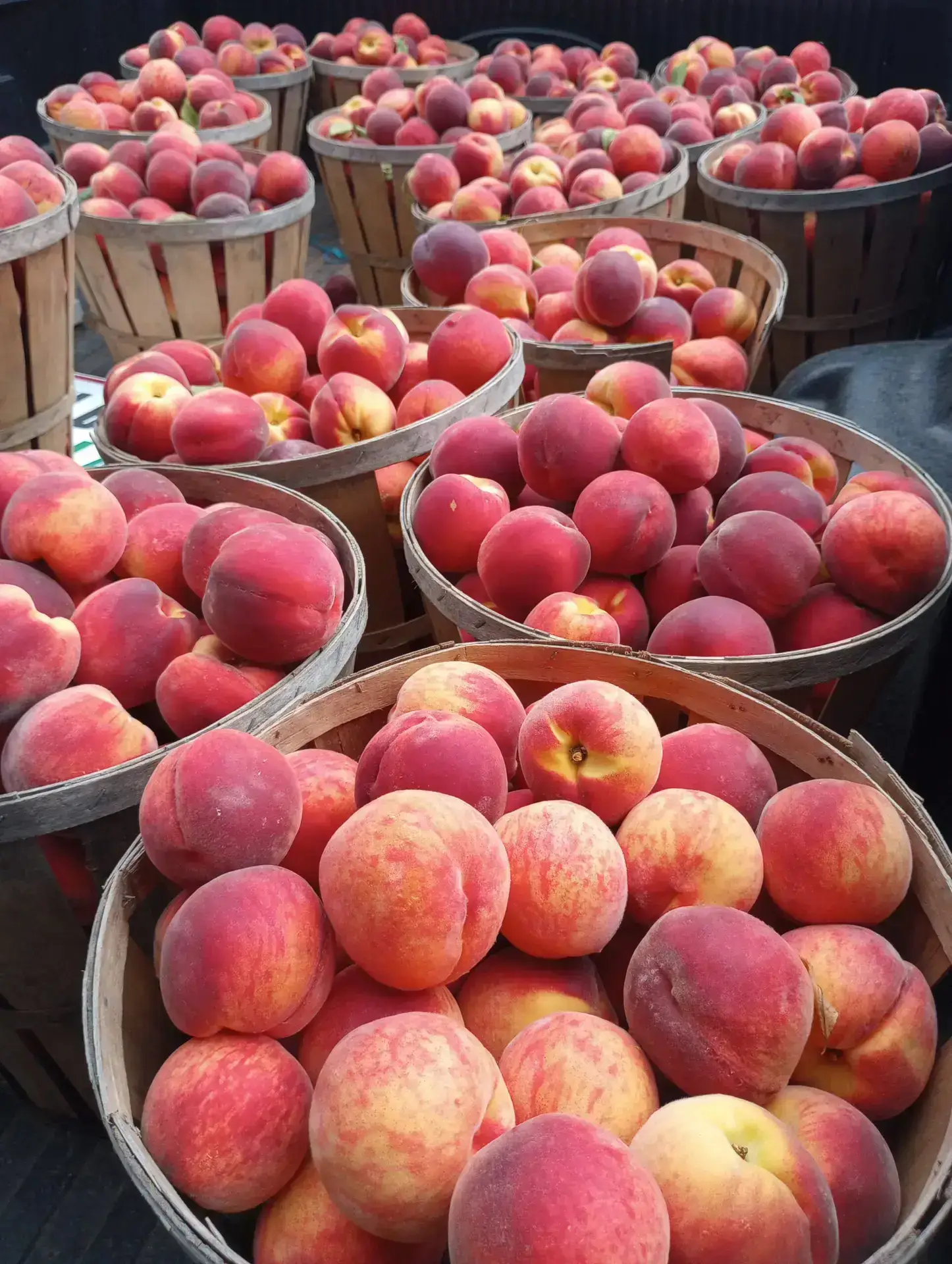
A peach can be bright red, perfectly round, and still disappoint when it is cut. Red color attracts attention, but it is not the most dependable sign that the fruit was mature when picked. A better decision begins with the background color, continues with aroma, and ends with a very gentle check for firmness. The order matters because squeezing first can bruise good fruit without telling you whether it developed proper flavor. Once those signals are read together, choosing ripe peaches becomes much more consistent.
Start With the Peach's Ground Color
Look beneath the red blush for the peach's underlying or ground color. A mature yellow peach should show a creamy yellow or warm golden tone instead of obvious green around the shoulders and stem. Utah State University Extension identifies this creamy or golden undertone as the best visual sign of ripeness and warns that rosy blush varies by variety. That advice matches what growers see when two mature varieties develop very different amounts of red. Ground color provides the more useful first check because it reflects the fruit beneath the showy surface color.
A green ground color is not the same as a firm peach that simply needs a little time to soften. Peaches harvested after reaching physiological maturity can soften and become juicier, but peaches picked too green do not suddenly develop the sweetness they missed on the tree. Utah State notes that green-picked peaches may gain juice while failing to become sweeter, and they can shrivel or turn tough instead of ripening properly. That is why color should be checked before firmness. A mature firm peach is useful, while an immature green peach is a poor bet.
| Signal | What to look for | What it tells you |
|---|---|---|
| Ground color | Creamy yellow or warm golden undertone | The peach reached a useful stage of maturity. |
| Red blush | Any amount, depending on variety | Attractive color, but not a dependable ripeness test. |
| Aroma | A clean peach fragrance near the stem | The fruit is developing eating quality. |
| Firmness | Firm to slightly yielding under palm pressure | How soon the peach may be ready to eat. |
| Surface condition | No sunken bruises, splits, or leaking spots | The fruit is sound rather than damaged. |
Use Aroma Before You Use Pressure
A mature peach often gives off a recognizable fragrance, especially near the stem. Aroma becomes more noticeable as the fruit approaches eating ripeness, although some varieties are naturally more aromatic than others. A peach with developed ground color but little aroma may simply need time, while a strong fermented smell can indicate that the fruit is overripe or damaged. Smell is useful because it adds information without putting pressure on delicate flesh. It should confirm what the color suggests rather than replace the visual check.
Touch should be the last part of the decision because peaches bruise easily. Support the fruit in your palm and apply light, even pressure with the whole hand rather than pressing a thumb into one spot. Utah State recommends gentle palm pressure and identifies a slight give as a sign that a peach is ready to eat. A hard but mature peach can be carried home for later, while a peach that collapses under light pressure is already past the stage most shoppers want. The goal is to judge firmness without creating the bruise you are trying to avoid.
Check the Peach in a Consistent Order
A repeatable sequence prevents one attractive feature from outweighing everything else. Color answers whether the peach appears mature, aroma helps confirm development, and gentle pressure estimates eating readiness. Surface condition then separates natural softness from bruising or breakdown. Following the same sequence also helps when comparing peaches from different varieties that do not look identical.
- Read the background color: Ignore the amount of red at first and look for cream, yellow, or gold beneath it.
- Check for peach aroma: Smell near the stem without handling the fruit more than necessary.
- Use gentle palm pressure: Choose slight give for immediate eating and greater firmness for later.
- Inspect for damage: Reject sunken bruises, leaking areas, open splits, or widespread wrinkling.
Match Firmness to When You Will Eat the Peach
The ripest peach on the display is not automatically the best peach for your needs. A slightly soft, fragrant peach is appropriate when it will be eaten that day, but it may bruise on the way home or become too soft if held for several days. A firmer peach with mature ground color is a better choice when you need more time. Extension guidance notes that firm ripe peaches can finish softening at room temperature, while fully ripe peaches should be refrigerated to slow further change. Choosing by intended eating time reduces both disappointment and waste.
- Eating today: Choose mature color, noticeable aroma, and a slight even give.
- Eating tomorrow: Choose mature color and fragrance with a firmer feel.
- Carrying farther: Favor sound, mature fruit without very soft spots that can bruise in transit.
- Comparing varieties: Expect differences in blush and firmness, but keep using ground color as the first test.
Know the Difference Between Ripeness and Damage
Natural ripening should make the peach soften evenly rather than collapse in one isolated place. A single dark, sunken, or watery patch is more likely a bruise than a sign of desirable ripeness. Wrinkled skin can indicate moisture loss, while leaking juice or a fermented odor suggests breakdown. Small surface marks do not always affect eating quality, but damaged flesh spreads quickly in a ripe peach. Sound fruit should feel whole and supported even when it has begun to yield.
Choose Your Peaches With Confidence
Begin with the ground color, confirm maturity through aroma, and use gentle palm pressure only after those first checks. Do not let a deep red blush convince you that a green peach is ready, and do not mistake a bruise for natural softness. Choose softer mature fruit for immediate eating and firmer mature fruit when it needs another day or two. Peterson Family Farm offers peaches as the crop matures, and current availability is posted on the farm's peach page. Bring this simple test with you and judge each peach by the signs that actually matter.
Planning a visit? Current availability, field status, and visit details live on the farm crop page.